Closing the Carbon Accounting Gap: Why mCDR Needs a New Generation of MMRV
By Dotan Levy

The ocean is Earth’s largest potential carbon sink – with an ability to remove gigatons upon gigatons of CO₂, but this global cooling pathway remains underfunded, underutilized, and under scrutiny.
This isn’t a technology issue; many innovative ocean-based carbon removal technologies exist to remove massive amounts of carbon dioxide safely underground. Instead, it’s the ability to rigorously measure, monitor, report, and verify (MMRV) marine carbon removal (mCDR). Without credible MMRV, mCDR risks repeating the early mistakes of forest-based carbon offsets: opaque methodologies, overstated claims, and ultimately, a loss of trust.
To address these doubts in the wider market, significant investment must flow into MMRV systems purpose-built for the unique challenges of the ocean environment.
A closer look at MMRV today
MMRV is the backbone of the carbon removal market. It provides quality assurance that a ton of CO₂ claimed to be removed is real, permanent, and accounted for. Without rigorous MMRV, carbon credits cannot be certified or trusted by buyers, regulators, or investors.
As Wood Mackenzie forecasts a trillion-dollar boom in the voluntary carbon market (VCM) and carbon capture, utilization, and storage (CCUS) by 2050, demand for transparent, science-based carbon accounting has never been higher. However, rigorous MMRV isn’t just about providing confidence; it is essential infrastructure for integrating CDR into national greenhouse gas inventories and tracking climate progress.
The clock is ticking and yet, across the sector, MMRV remains a work in progress. Poor governance and weak monitoring have sometimes tarnished VCM credibility and a lack of comprehensive standards has led to inconsistency.
The gap is even wider for mCDR: Ocean MMRV tools and protocols continue to lag behind technological advances in mCDR projects.
The unique challenge of measuring carbon in the ocean
Closing this gap requires urgent focus and funding. MMRV on land has been hard enough; in the ocean, it’s exponentially more difficult. The ocean’s vastness and constant movement complicate data collection and oceanographic monitoring technologies have not kept pace with evolving mCDR methods.
Modern remote sensing and geospatial technology have been important. LiDAR has played a key role above ground, accessing coastal ecosystems like marshes and mangroves, but more is needed to track what’s happening deep below the ocean’s surface. Companies will continue important experiments, bringing ocean conditions to the lab and building realistic modeling for mCDR testing, but it has to work in real-world ocean ecosystems.
Innovations are quickly emerging to fill the void, and we’ve seen the rise of digital Monitoring, Reporting and Verification (dMRV) platforms. Companies like Mangrove Systems, Carbonfuture, Cula, Alcove, and Bluelayer aim to standardize carbon flux modeling, integrate ocean sensor data, and provide consistent reporting frameworks that buyers and regulators can trust. Open-source tools, like C‑Star, a partnership between Isometric and [C]Worthy, are also laying the groundwork for greater transparency and collaboration.
Why hardware matters
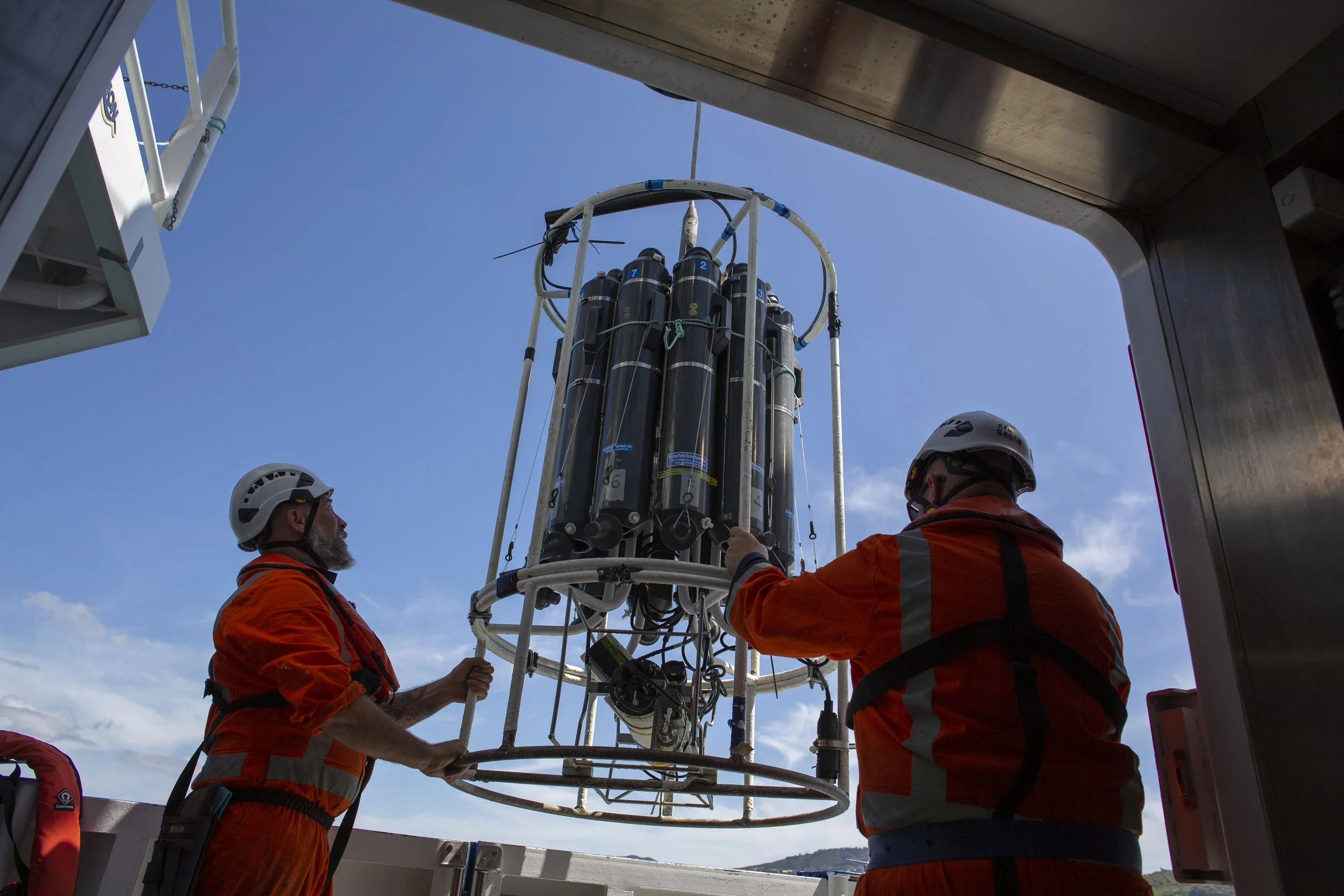
What’s needed now is a new generation of MMRV purpose-built for the ocean. That means in-situ sampling, autonomous sensors, and real-time modeling that can accurately quantify carbon fluxes at scale. In-situ data collection is especially critical in mCDR. Only by tracking carbon where it actually moves, in the ocean itself, can we build the most reliable and verifiable methods on Earth. Recent guidance from both the U.S. DOE and the U.S. Marine CDR Research Strategy underscores this reality.
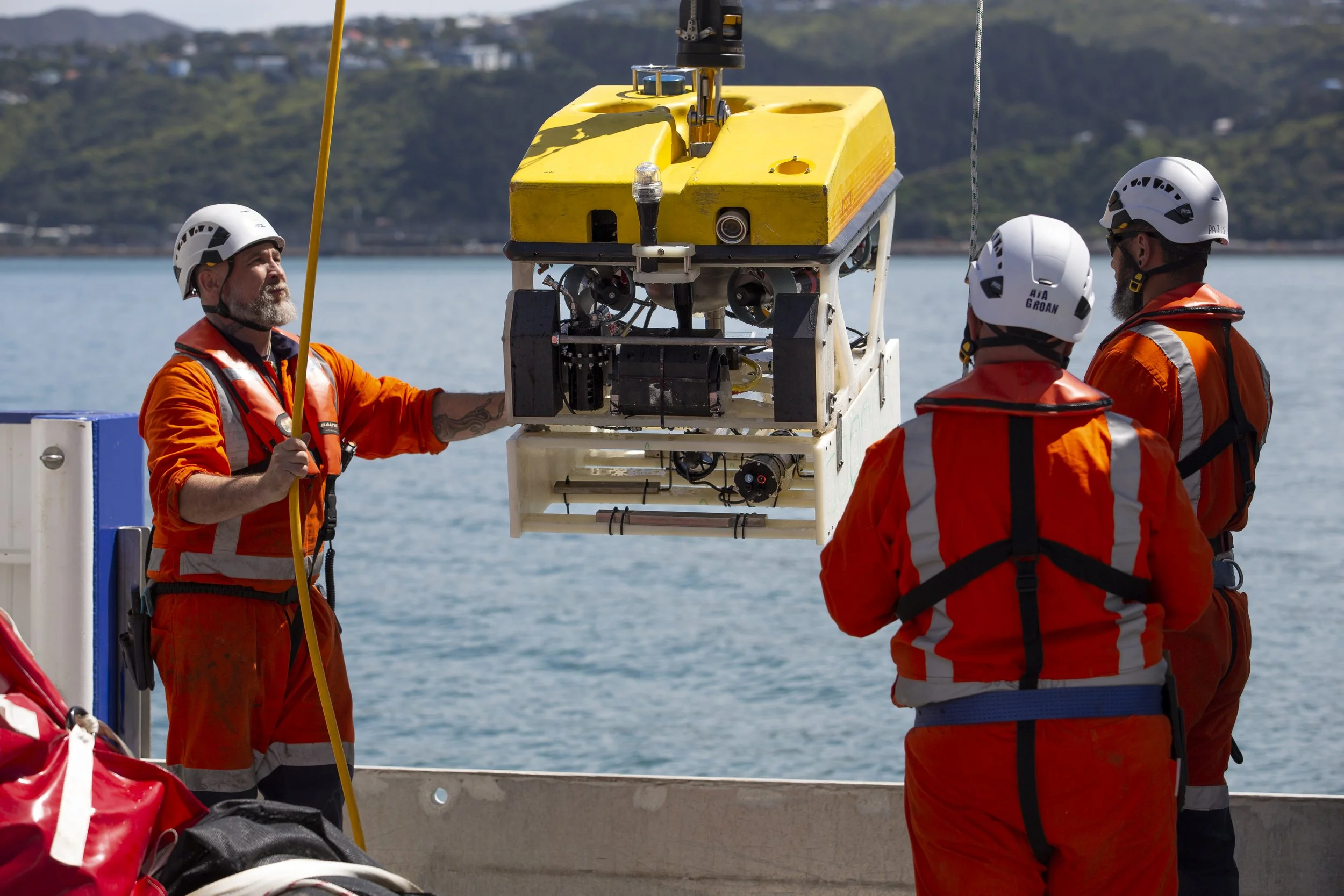
Developments in digital technology will continue to be critical, but true progress will come in the form of specialized hardware capable of navigating the ocean’s deep, remote, and difficult-to-access waters. Remotely Operated Vehicles (ROVs) and Autonomous Underwater Vehicles (AUVs) equipped with sensors and cameras will play critical roles in this.
Gigablue, for example, has developed an autonomous ROV designed to generate ground-truth data on the permanence and effectiveness of its methodology developed in collaboration with Puro.earth. The ROV collects samples from multiple depths in a single deployment and uses advanced cameras to visually track conditions and sinking rates with precision. While tailored to Gigablue’s approach, it offers a replicable blueprint for others working in the mCDR space.
The investment gap
Innovating, testing, and deploying the next generation of MMRV is costly, but without a strong MMRV foundation, even the most promising mCDR pathways will struggle to scale. Advanced equipment, high-tech sensors, data processing, and ocean expeditions all come with significant expenses.
This cost barrier can and must be overcome through investment from both private and public sectors. Investment into MMRV technologies and mCDR more widely must be on par with what we’ve seen in land-based CDR technologies like direct air capture (DAC) – which has already seen around $2.3 billion in investment, roughly 30% of total private sector equity investments in CDR altogether.
The disparity is also visible in policy. While DAC has benefited from landmark federal investments like the U.S. Department of Energy’s Regional DAC Hubs program and the 45Q tax credit, mCDR has received relatively limited support.
Unlocking an ocean of potential
Unless investment in ocean MMRV catches up, the industry will remain under-credited and under-deployed – even when it offers these lowest-cost, highest-durability removal potential.
The stakes couldn’t be higher. According to CDR.fyi, we’re less than half a percent the way to reaching 10 gigatons of removed carbon by 2050 (0.43% as of Dec 2025). We have a long way to go, and the ocean is a vast, untapped solution for durable, scalable, cost-effective, and scientifically-rigorous carbon removal.
With the right tools and capital, ocean-based carbon removal can deliver precisely what the industry needs, avoiding the pitfalls of the past that have hindered carbon markets. All we have to do is invest in four letters: MMRV.