Research Framework
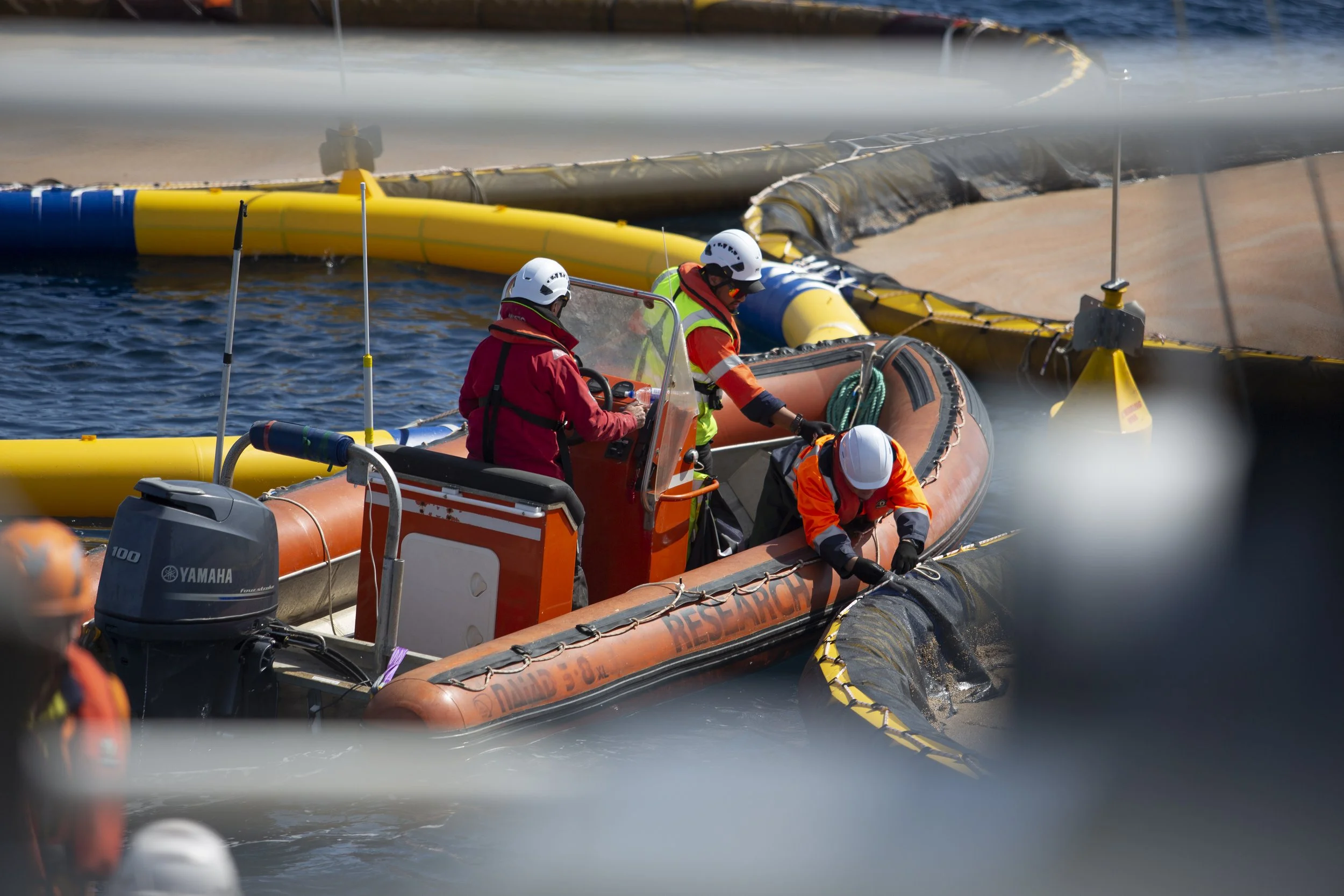
Our research studies the marine environment and conditions in an Area of Interest (AOI) and investigates a process known as Microalgae Carbon Fixation and Sinking (MCFS) (as outlined in Chapter 3 of Puro.Earth’s MCFS Methodology v1, 2025).
The research program is comprised of small-scale, controlled field trials examining how eligible substrates interact with the AOI’s biogeochemistry and physical conditions, advancing carbon flux understanding and environmental assessments.
Results will inform scientific, regulatory, and policy discussions on the potential role of ocean-based carbon removal within precautionary research frameworks.
All activities are permitted, designed, and reviewed in compliance with domestic environmental law and the London Convention/London Protocol (LC/LP).

Permitted by the EPA
Gigablue has conducted numerous trials in the Mediterranean and South Pacific Ocean and will continue to trial in other jurisdictions in close coordination with local authorities.
Current field trials in the South Pacific are conducted within the New Zealand Exclusive Economic Zone (EEZ) under the Exclusive Economic Zone and Continental Shelf (Environmental Effects) Act 2012 and Permitted Activities Regulations 2013.
Activities are regulated by the Environmental Protection Authority (EPA NZ) as permitted research, designed to have no more than minor or transitory environmental effects, consistent with the precautionary and proportionate standards of New Zealand’s marine research framework.
Each field trial requires separate authorization through the pre-activity notification and reporting process established under the EEZ Act.

How Permitting Works
Each field trial requires separate authorization through the pre-activity notification and reporting process established under the EEZ Act.
Pre-Activity Notices are submitted to the EPA NZ at least 40 working days before commencement for the EPA’s approval.
Extensive environmental assessments and contingency plans are submitted.
Oversight is provided by NZ EPA and supported by independent scientific review and local community engagement.
All activities are limited in spatial extent, duration, and environmental effect.
Compliancedocumentation and post-trial reports are filed with the EPA.

Working With Local Stakeholders
Local peoples, governments, and tribes have been the stewards of their seas for generations. Successful carbon removal relies on a close, collaborative bond with the community.
Although we operate far from human settlements and points of interest, we share our science, progress, plans, and learnings openly with local stakeholders, earning trust and building active collaboration.
We believe that communities must share in the opportunities generated by mCDR through employment, education, research, infrastructure and more.
This includes sourcing as much goods and services as possible close to our zones of operation, collaboration with local academia, and hiring local teams.
Submit Feedback
Learn more about submitting feedback and questions to Gigablue.
Selecting The Research Site
Research sites within the AOI are carefully selected based on multiple criteria.
Area: At least 10 × 10 km² equivalent within the Great South Basin, approximately 200 km southeast of Dunedin.
Depth: Over 1,000 meters.
Conditions: Low-current, deep-ocean environment typical of Subantarctic surface waters; outside marine reserves and protection zones.
Seafloor: Predominantly soft sediments with low biological productivity and no known sensitive habitats identified.
Deposition density: ≤ 0.105 g/m² at seafloor following full particle descent.
Duration: Each trial is conducted over a 9 - 15 day period, plus transit and weather buffer.
Geo-Optimization: Identifying The Optimal Location For Microalgae Carbon Fixation and Sinking
Who’s Involved
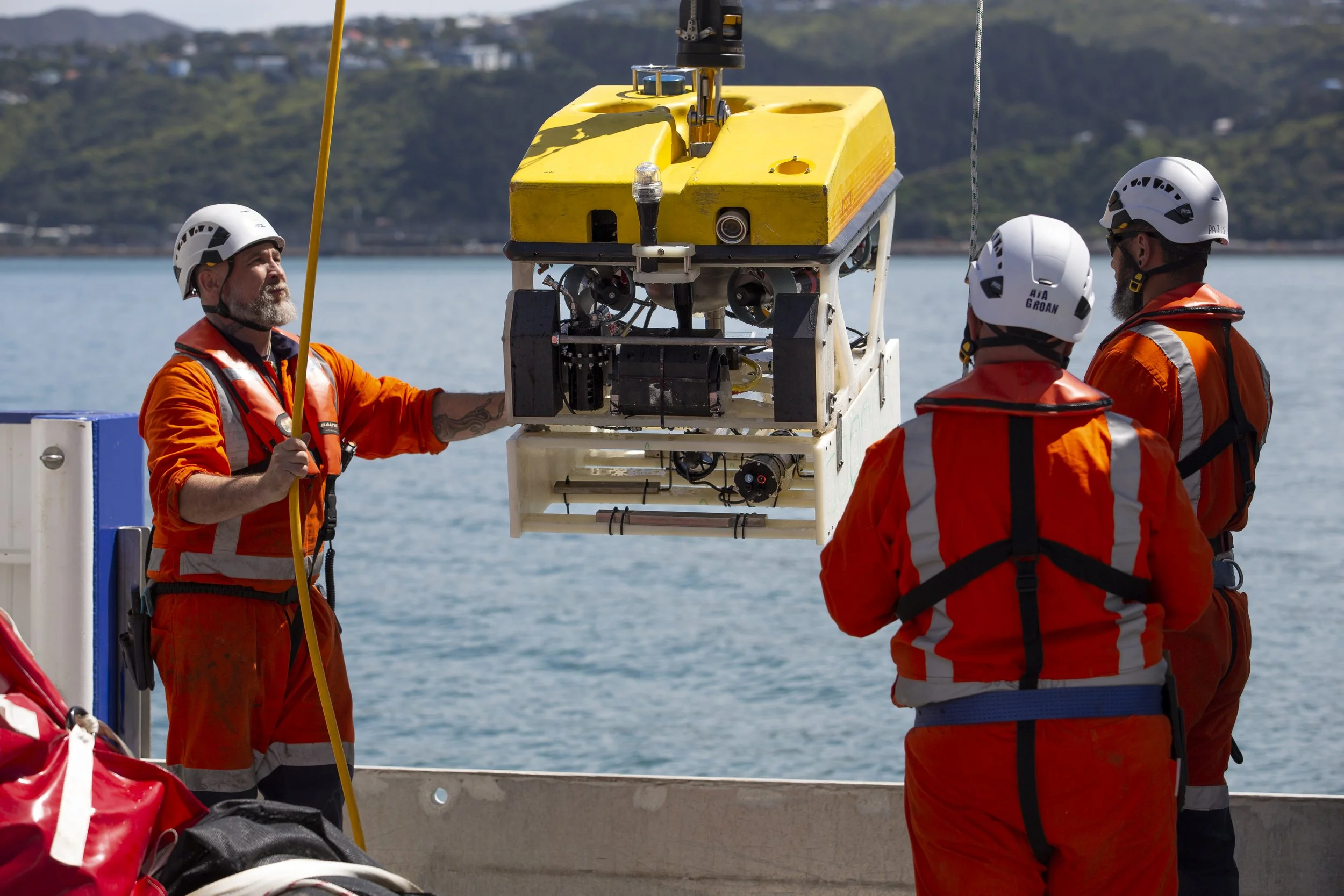
Earth Sciences New Zealand (formerly NIWA): Lead the scientific review process. Provide impact assessments experts, field design experts, vessel operations, experimental laboratory set-up, instrumentation, and more.
Cawthron Institute: Scientific support. Provide authorised laboratory analysis and quality assurance.
Calypso science: Numerical modeling, data analysis and visualization, dispersion and fate analysis.
Seaworks and Kernohan: Operational partners providing offshore logistics.
Preliminary Findings
Negligible Temporary Changes
Field sampling and modelling indicate negligible and temporary nutrient changes (macronutrient reduction < 1.7 %, ~0.1 % potential effect on phytoplankton productivity).
All trials follow pre-registered, peer-reviewed protocols and incorporate real-time monitoring and defined halt thresholds.
Data and methods are being prepared for publication and submission to New Zealand authorities to support future environmental assessments.

Scaling Responsibly

From Lab to Ocean
Gigablue’s experimental and modeling program spans from laboratory validation to full-scale ocean deployments, carried out in collaboration with leading scientific institutions and under independent oversight.
In parallel to physical experiments, Gigablue developed a suite of predictive models to evaluate environmental safety, optimize deployment sites, and ensure compliance with ocean health standards.
Experiments
| Year | Location | Type | Substrate | Key Aspect | Oversight |
|---|---|---|---|---|---|
| Mar 2024 | Mediterranean Sea | Open ocean | V1 | MMRV validation | - |
| May 2024 | NZ ocean | Open ocean | V1 | MMRV validation | ESNZ |
| May 2024 | ESNZ lab | HNLC waters | V1 + V2 | Substrate performance | ESNZ |
| Oct 2024 | NZ ocean | Mesocosm (on board) | V1 | MMRV & dispersion | ESNZ |
| Feb 2025 | ESNZ lab | HNLC waters | V2 | Performance optimization | ESNZ |
| Feb 2025 | ESNZ lab | HNLC waters | V2 | Validation of production batch | ESNZ |
Modeling Studies
| Model | Purpose | Key Insight |
|---|---|---|
| Dissolved Oxygen Model | Quantifies oxygen drawdown near seabed due to organic matter degradation. | Ensures compliance with benthic oxygen thresholds. |
| Substrate Dispersion Model (Lagrangian) | Simulates substrate drift, plume size, and seabed deposition. | Identified optimal deployment sites in NZ. |
| Growth-Mass Balance Model | Evaluates nutrient effects and risk of local nutrient depletion. | Confirms phytoplankton growth remains within natural variability. |
FAQs
Learn more about Gigablue’s Microalgae Carbon Fixation and Sinking (MCFS) Field Trials in New Zealand.
-
MCFS technologies enable the growth of microalgae (phytoplankton) on organic and inorganic substrates. Once colonized, and after a predetermined amount of time that is based on the engineered substrate specific design (and not more than 30 days), substrates sink rapidly to the deep ocean, where carbon can be stored for centuries.
-
The work is lawfully permitted by the New Zealand Environmental Protection Authority (EPA) under domestic legislation that fully implements the inforce regulations of the London Protocol (LC/LP). Each permit authorizes a single, time-limited research activity; any further work requires a new EPA review and approval.
-
Yes. New Zealand is a Party to the London Protocol, which governs marine geoengineering research. National law fully implements LC/LP provisions for “purpose other than disposal,” environmental assessment, material disclosure, and local indigenous community co-governance.
-
Eligible components of the Substrate may include one or several of the following:
a. Non-toxic and non-hazardous organic material.
b. Non-toxic and non-hazardous inorganic material, such as minerals.
c. Trace elements (micronutrients) up to 2 % of the total mass of the Substrate.
All constituents are well-characterized and non-toxic.For example, Gigablue’s v1 substrate formulation included clay, porous rock, plant-based wax, and minerals.
-
Research occurs within well defined, pre-permitted zones.
To enable flexibility in choosing the optimal location for the research on a given day’s water currents and weather, permitted areas are larger than actual trial footprint.
Gigablue’s last field trial (registered with NZ as GIGPA02) took place inside an area smaller than 16x16 km2 equivalent.
-
Environmental safety is managed through a stepwise research process developed with independent scientists and regulators. Before each trial, conservative environmental thresholds are identified and reviewed by experts. Experiments are then designed within those limits, deployed under permit, and monitored throughout their duration. Key parameters are nutrient uptake and impact on benthic ecosystems due to oxygen reduction and smothering. These are measured before, during, and after each release. Results are reported to the New Zealand Environmental Protection Authority. Each field trial is small in scale, evaluated independently, and followed by a scientific and regulatory review before any increase in scale or complexity.
-
The substrate includes micronutrient oxides in a solid form, that are still bioavailable for direct consumption, similarly to the interaction of phytoplankton with dust particles. It does not fertilize the ocean, but rather actively exports phytoplankton that was cultivated within the substrate prior to its sinking. The trials monitor nutrients, chlorophyll-a, and oxygen, capturing any short-lived biological response.
-
Controlled experiments, as well as modeled maximum surface concentrations and residence times, indicate negligible light reduction.
-
No. In MCFS, organic matter concentration on the sediment is designed to be low, as substrates are well dispersed after the floating period (max ~0.105 g m⁻² in the last trial) and is too low to affect oxygen.
Dissolved-oxygen profiles are collected to confirm stability before and after field work.
Moreover, with MCFS the deployment of substrates and its areal density can be fully controlled and eliminates risk of ‘high’ concentrations effects.
-
The small area and short duration of the activity make measurable ecosystem changes unlikely. Baseline and post-trial CTD, DO, nutrient, and chlorophyll-a casts verify system stability.
-
Field trials use an array of oceanographic sampling tools, drones, satellites, ROVs and more to measure currents, conductivity-temperature-depth profiles (CTD), dissolved oxygen (DO), nutrients, chlorophyll-a, plume dispersion, and particulate organic carbon (POC) below the pycnocline. This data supports future MMRV protocols for marine carbon research.
-
Study design and monitoring plans are publicly filed. Data is shared with the New Zealand EPA and independent scientific institutions. The research team intends to publish results in peer-reviewed journals.
-
The permit, materials list, KML coordinates, timing and monitoring plan are public. Consultation with iwi and local stakeholders is completed before approval, according to the regulation requirements. Experimental plans are regularly discussed with iwi.
-
Standard health and safety protocols as well as standard maritime procedures apply, such as: containment pens, radar reflectors, drifter buoys, satellite tracking, and coordination with Maritime New Zealand. Activities are short, localized, and low-risk.
-
Principle 15 of the 1992 Rio Declaration defines the Precautionary Principle as follows:
“Where there are threats of serious or irreversible damage, lack of full scientific certainty shall not be used as a reason for postponing cost-effective measures to prevent environmental degradation.”
The principle establishes that uncertainty is not a justification for inaction. When environmental harm is evident, governments are required to take proportionate, science-based measures to prevent further degradation. Controlled and transparent research provides the information necessary to apply precaution effectively.